

The air at Logan Pass in Glacier National Park carried a refreshing chill, the kind that made every breath visible in the dim, pre-dawn gray. It was the final morning of my first-ever photography workshop, and we were waiting for the sun to clear the high, rugged peaks.
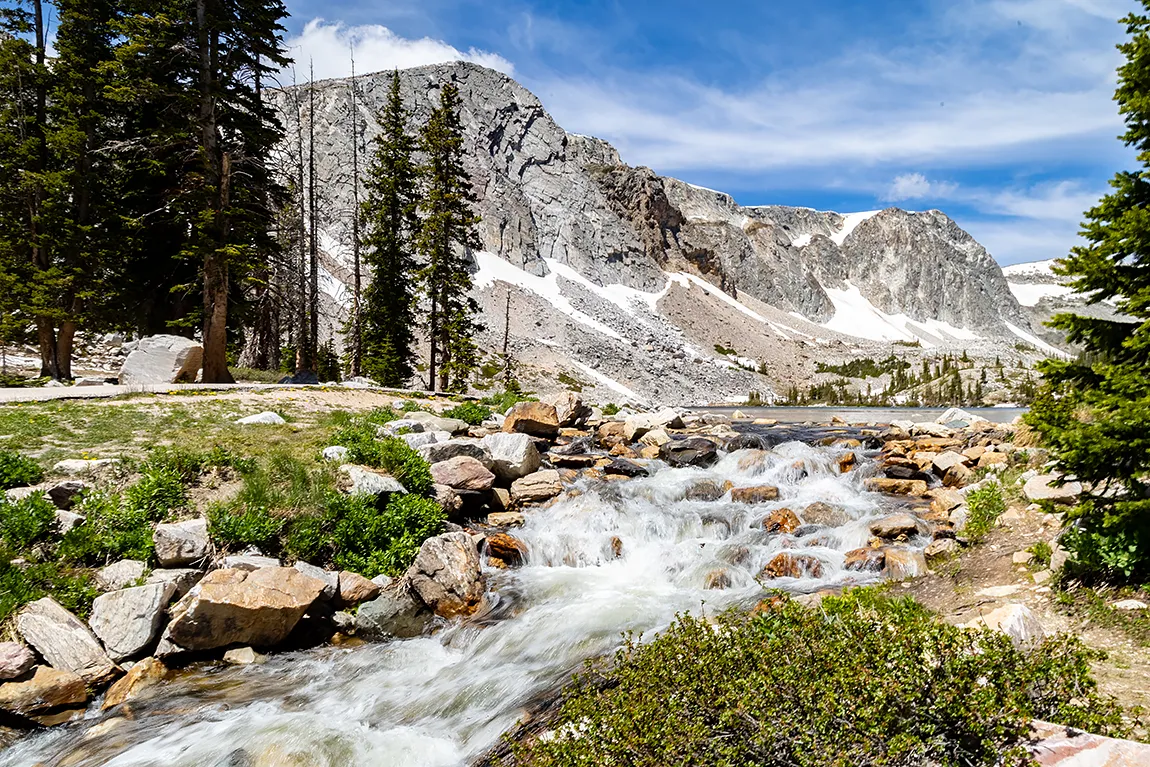
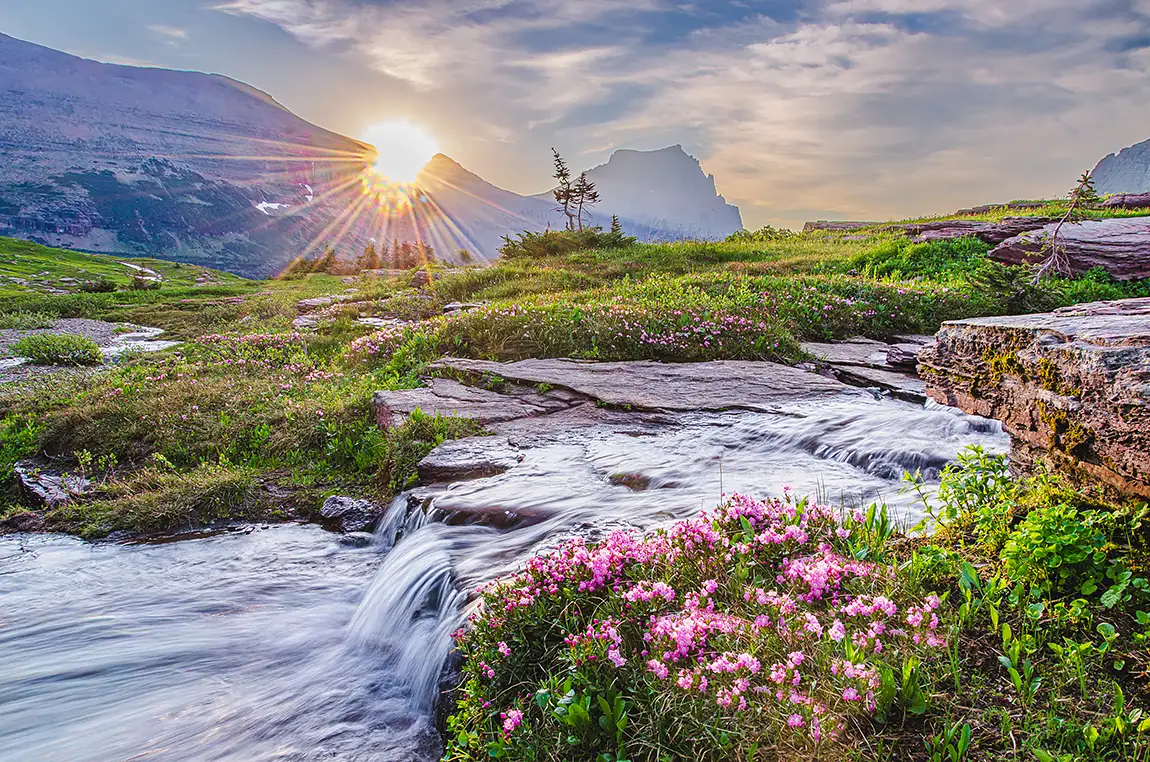
I positioned my tripod low, just inches above a crystal-clear alpine stream cascading over terraced rocks. Months of preparation, reading about the exposure triangle—and how to balance the fast motion of rushing water with a bright sky—felt entirely abstract until that exact moment. Our instructor had taught us about creating sun stars, bracketing exposures and blending them later, and double the distance focusing so we could get the entire scene tack sharp for the last five days.
Trying to bring all of the new learnings together, I adjusted my shutter speed, trying to find the perfect balance that would smooth out the creek’s current without blowing out the sky. And then a second and third exposure with slightly different exposures. My heart did a small flutter of nervous excitement. What if my exposure was completely wrong?
But when I blended the three photos together and made a few adjustments, it all came together—the world shifted. On my computer screen, the landscape transformed into a perfect harmony: the timeless grandeur of Glacier’s peaks, the delicate, fleeting beauty of the pink blossoms, and the perpetual rush of the mountain stream. The display of that spectacular wash of morning light was captured forever. It wasn’t just a photograph of a 2014 sunrise; it was the exact moment I stopped just looking at the world, and truly began to see it. I left that workshop with a whole new confidence in my photography and editing skills.