


The red flag was adopted in the 19th century as the banner of unions and workers’ movements. After the Russian Revolution of 1917, this flag was progressively adopted by unions, parties, and regimes that adhered to communism. Red became associated with the politically advanced and the revolutionary (through a kind of chromatic declension, Mitterrand’s French Socialist Party adopted the color pink, a color that spread to other European socialist parties).
In the flags of the member countries of the United Nations, red is clearly dominant, being present in more than three-quarters of the flags. In modern times, red is associated with danger, the forbidden, and the wrong – in road and railway signaling, in the world of firefighters and ambulances, and in school life. But it can also be the color of joy and celebration (Santa Claus’s dress), of seduction (women’s dress), of the pleasure of the senses (red berries are considered to be the most delicious), and of vivacity (red wine is considered to be stronger than white; red cars go faster than others).
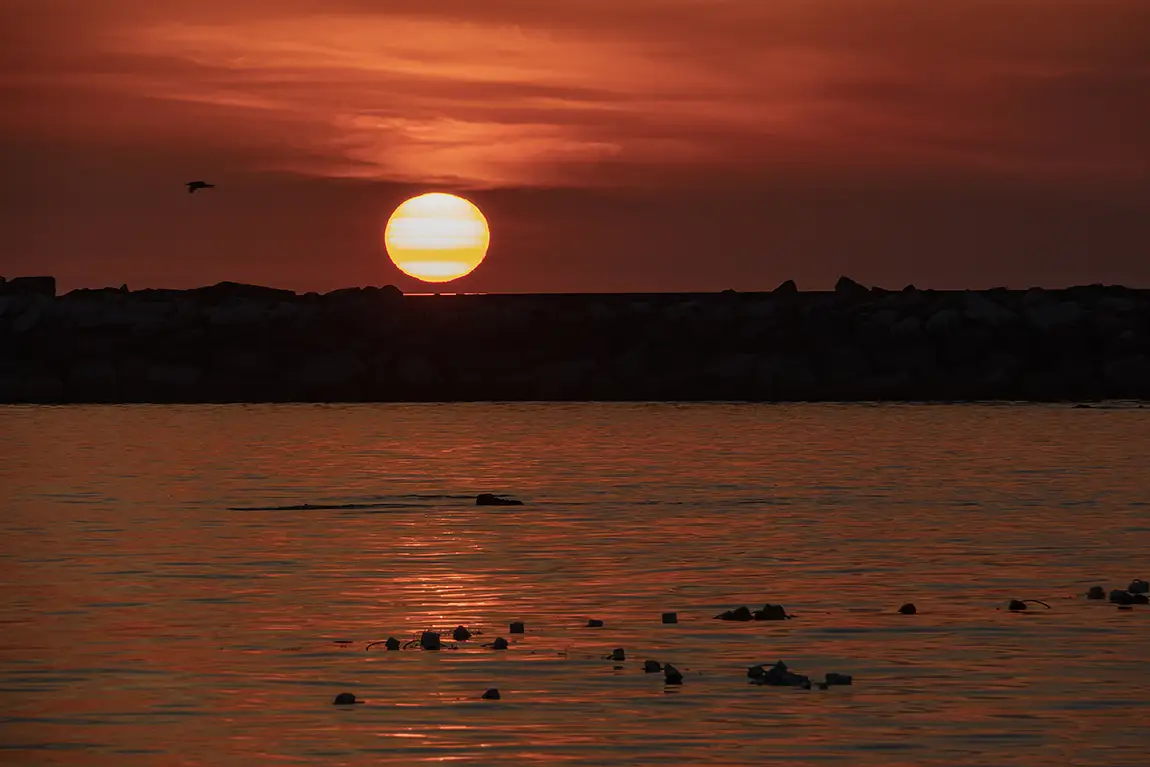
When I saw the sunset over the ocean a few days ago, indeed I felt no danger, only excitement and joy. The sun reflected on the calm waters of the sea where some algae floated (which are very abundant on the Portuguese coast at this time of year). A seabird was flying nearby.