

There are mornings when nature rewards patience with a quiet magic; moments that last only minutes, but linger in memory for years. That November morning in 2025 was one of them. I arrived at the location well before sunrise, climbing onto a rocky cliff overlooking the still, dark water of the lake. It was just shy of 8:00 a.m., and the cold bit sharply at any skin foolish enough to be exposed. The thermometer read –3°C, but the air felt colder. My hands and feet had gone past numb, settling into that dull ache familiar to anyone who has waited too long in winter’s grasp.
I had come prepared, though—at least photographically. My camera was already mounted on the tripod, a 70–200mm lens attached zoomed to 96mm, composition set while the world was still blue and silent. All I had to do was wait. Experience has taught me that when the forecast hints at cold air meeting a relatively warm lake, there is a chance for atmospheric drama. And that morning, the lake did not disappoint.
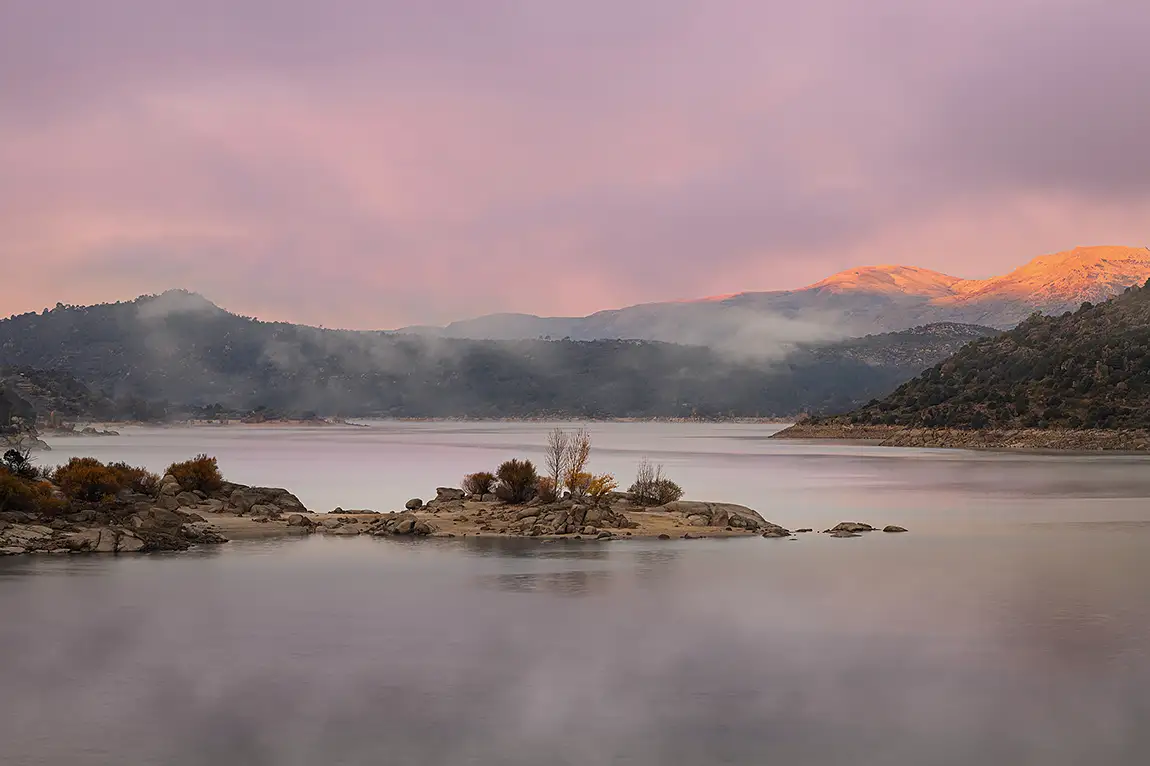
As the horizon brightened and the first rays began their slow climb over the mountains, the transformation started. Thin strands of mist drifted upward from the lake’s surface; delicate, ghostlike, shaped by currents invisible to the eye. It rose in silent curls, catching the light in unpredictable, mesmerizing ways. This ethereal evaporation was the lake exhaling into the cold dawn, a phenomenon born from the temperature contrast between water and air. To me, it felt like the entire scene was breathing.
Then came the colour.
The mountains in the distance ignited first, touched by sunlight long before it reached the valley floor. Their peaks shifted from muted greys to glowing gold, as if lit from within. At the same time, the sky above unfurled into soft pinks and lavender tones; the kind of palette that only a rising sun in late autumn seems able to conjure. For a brief window, the landscape felt suspended between seasons, between cold shadow and warm illumination.
I hardly dared move. Even the gentle tap needed to trigger the shutter felt like a risk; so I used a 10-second delay to prevent any chance of shake. My fingers, stiff with cold, struggled to respond, but the scene unfolding before me made every uncomfortable second worthwhile.
From my perch on the cliff, the small rocky island in the lake stood out like a quiet sentinel. Its sparse trees, already transitioning into winter dormancy, caught the morning mist as it drifted past, creating layers of depth that only the softest light can define. The water itself became a mirror for the colours above, its surface shifting between reflections of pink sky and the muted tones of the surrounding hills.
By the time the sun fully broke over the mountains, the spell was already beginning to fade. The mist thinned, the colours lifted, and the ordinary world slowly reclaimed the landscape. But the camera had captured those fleeting minutes: the fragile balance of cold and warmth, shadow and light, stillness and breath.
This photograph reminds me that sometimes the most extraordinary scenes require nothing more than preparation, patience, and a willingness to stand in the cold long enough for nature to take the stage. That morning, all I had to do was be out early, withstand the cold and wait to witness how the day awakened.