

Salt Lake City lies next to two deserts and below a third, although the distinction between them is somewhat thin in many senses of the word. The salt that fills basins in the West Desert also turns the Great Salt Lake into its own kind of multimodal desert. The saline water creates a void that both excludes most aquatic species and fulfills a vital role in an ecosystem that supports millions of migrating birds.
Like the birds, the city itself can only truly exist on the edges. Unlike the birds, the city and surrounding inhabited areas act as a sponge, soaking up runoff from the various river systems feeding into the basin, sucking the lake dry. The desert thus retreats, revealing the desert beneath it.
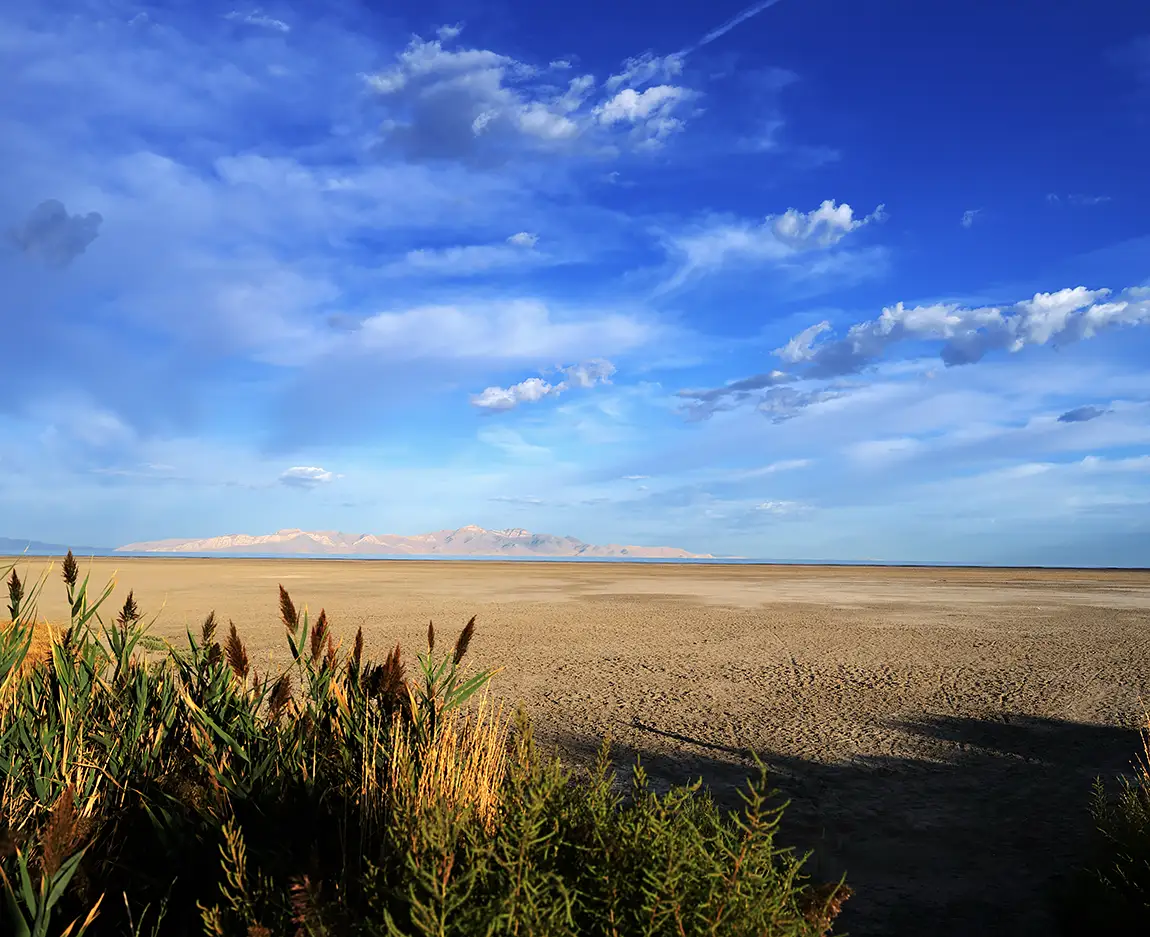
All the flatland in this photo was underwater only a few decades ago. Now the liquid desert flees, leaving a salty, sandy desert in its wake, encroaching on Antelope Island (shown in this photo, center-left). The sky above has also turned into a desert of sorts, as, with climate change, the snowpack feeding into the multimodal desert diminishes.