

Taking advantage of my son’s spring break in early April, I organized a family trip to Death Valley National Park—a landscape I hadn’t visited in nearly two decades, back before photography became a serious passion of mine. True to its reputation, Death Valley was already showing off its summer heat despite it being spring, with temperatures climbing toward 100°F by noon. We wisely restricted our family excursions to early mornings and late afternoons, retreating strictly indoors or poolside during peak hours.
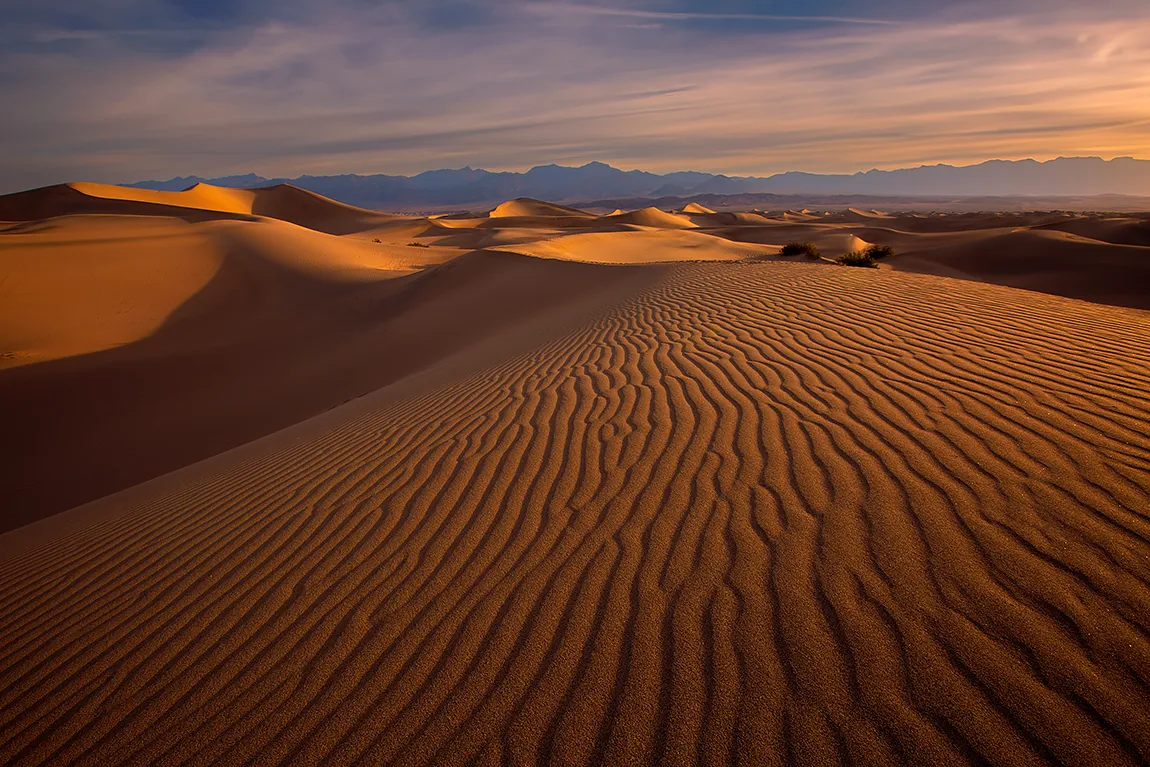
I spent two separate evenings scouting the Salt Flats and Dante’s Peak areas, though conditions weren’t quite aligning for a strong photograph. On the penultimate day, I set an early alarm well before dawn to try my luck at the Mesquite Flat Sand Dunes, hoping to capture something magical. While windy nights typically act as nature’s broom by smoothing away tourist footprints, fortune offered no such courtesy that morning—footprints crisscrossed as far as the eye could see.
Determined to find an undisturbed scene, I trekked up and down across the dune field, earning an unexpected but thorough cardio workout in the process. Pushing deeper into the landscape finally paid off: I discovered pristine sections of untouched sand ripples for my foreground, backlit by soft, warm morning light that cast a compelling contrast of light and shadows across the dunes, capped by striking patterns in the sky to complete the frame.