

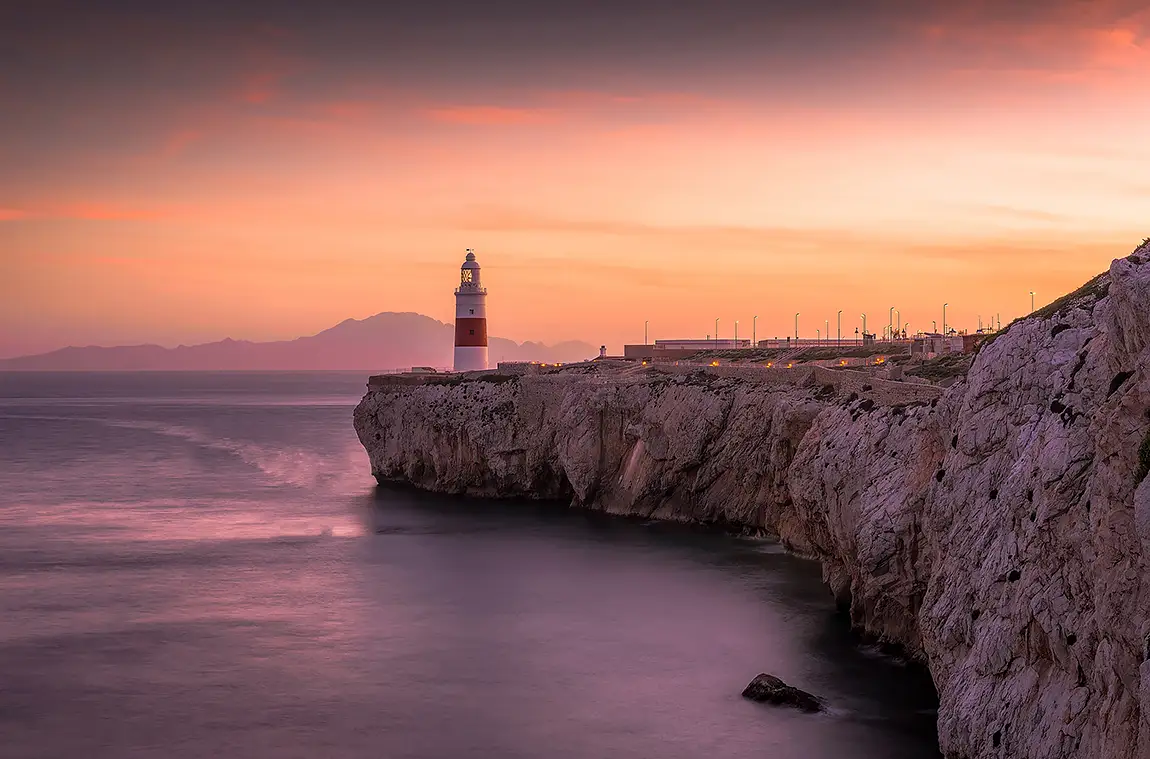
The day had begun with remarkable clarity at the Trinity Lighthouse on Gibraltar. The sea stretched out like polished glass, disturbed only by the gentlest ripples. With barely a whisper of wind, the air carried a peaceful stillness that seemed to slow the passage of time.
Visitors paused to admire the endless blue horizon while seabirds drifted effortlessly overhead. The Rock stood proudly behind the lighthouse, bathed in warm afternoon sunlight, its rugged cliffs glowing against the crystal-clear sky. Looking south across the Strait of Gibraltar, the coast of Africa stood out with remarkable clarity. Just 14 kilometers away at its narrowest point, the distant mountains seemed close enough to touch, a rare and striking reminder of how near two continents lie.
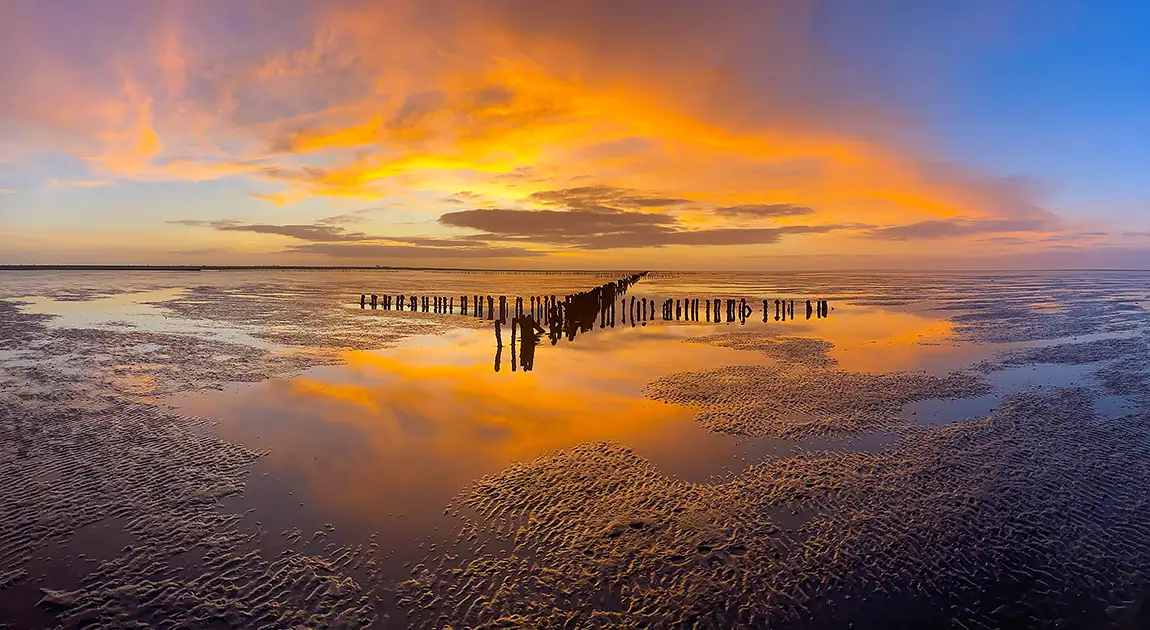
As evening approached, the first soft clouds appeared, drifting in from the west. They gathered slowly, not enough to hide the sun, but just enough to transform the sky into an artist’s canvas. Shades of gold melted into amber, then deep orange and crimson. Streaks of pink and violet spread across the clouds, each moment more breathtaking than the last.
The calm sea mirrored the spectacle perfectly, doubling the colors until it was impossible to tell where the sky ended and the water began. Standing beside the old Trinity Lighthouse, with Europe behind and Africa visible across the water, it felt as though the world had paused for a single unforgettable moment.
When the sun finally slipped below the horizon, the last rays lingered on the clouds, leaving a glowing afterlight that faded gently into twilight. It was one of those rare evenings that would remain in memory long after the stars had appeared—a perfect Gibraltar sunset, framed forever by the steadfast watch of the Trinity Lighthouse.
If this is based on a real evening you experienced, it reads almost like a travel memoir, capturing one of those rare days when the Strait is calm enough for Africa to appear exceptionally clear.