

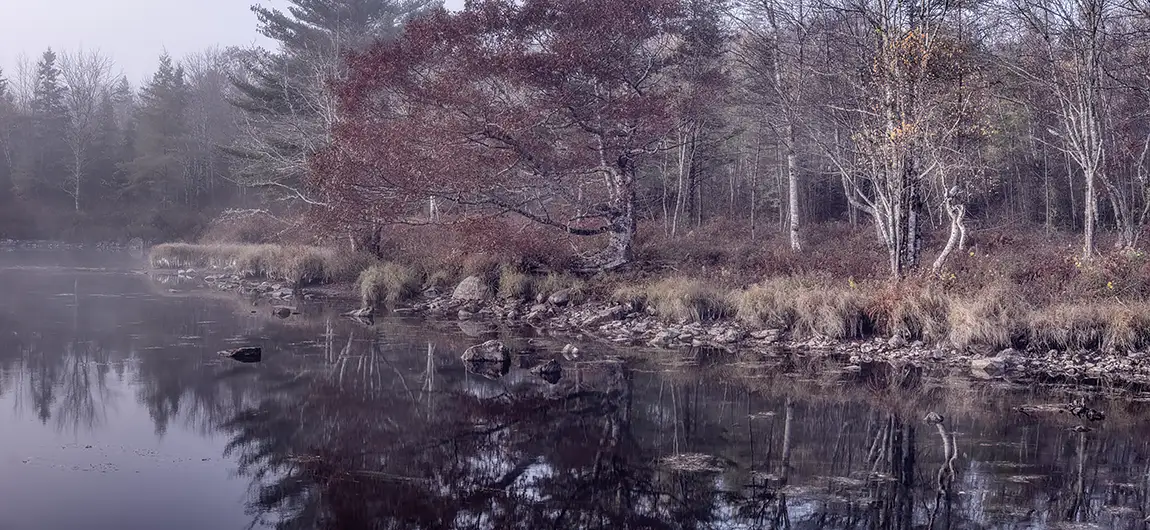
Heavy fog is my preferred atmospheric occurrence for photography. The soft, diffused light, and its ability to separate foreground and mid-ground elements from what can otherwise be considered the chaos of woodland or other background elements, keep a subject more apparent. It helps make compositions much less cluttered and simpler. Because of fog’s ability to act as a huge softbox for light, there are no harsh shadows and less contrast in this image, yet the colours remain saturated. Such conditions evoke a sense of serenity. On this particular morning, I travelled to a spot where, in the past, I’ve taken some very rewarding images in this area. It’s a short drive on a gravel road at the end of nowhere, really—certainly not an area frequented by people who aren’t from this small community. Hunting season had begun, and the woods were filled with hunters, so safety is paramount, and wearing Hunter’s Orange is well advised when travelling this stretch of road.
On this morning, the fog was very heavy and lingered for quite some time. Usually, it burns off with the rising sun, but, thankfully, it stayed around quite late, which gave me plenty of time to look for compositions. There was absolutely dead-calm wind, which turned out to be helpful in capturing this five-shot panoramic image. Each image had a 30 percent overlap. The hardest part was getting the tripod level enough so that the camera’s internal level indicator stayed consistent from left to right while panning.
What caught my eye at this spot was the bright white bark of the paper birch on the opposite shore of this narrow river. Despite the overall flat, soft light, the trunk popped against the darker forest behind it. I initially focused on this tree as my subject, but as I lingered and studied the area more, I was drawn to the red maple—sparse in foliage but commanding further attention. What I found interesting, though I hadn’t noticed it at the time, was that the large maple resembled a dragon’s head. It was pointed out to me by someone on social media. I don’t usually previsualize my subject with the intent of anthropomorphism; I notice such things after the fact or, sometimes, have others point them out. This unexpected insight opened my eyes to the potential narratives that can emerge from mere observations. By embracing this perspective, one can enhance their artistry and create more compelling stories through photography. It’s the kind of thing that, once seen, you cannot unsee. Had I shot this location from farther along the shore to my left, the illusion would have been lost—a serendipitous fluke, a happy accident that went in my favour. I think the ability to see this type of thing in the field comes from being present in the moment, something that takes a lot of practice and patience. What better way to enjoy a quiet morning than pausing to meditate in the great outdoors and capture the moment for others to enjoy.